Rise in LDS LGBTQ youth suicides after Nov. 2015 Policy Change
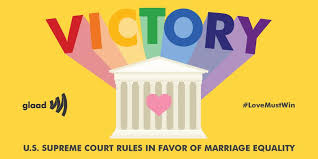
In June 2015, “The U.S. Supreme Court made marriage for same-sex couples legal nationwide, declaring that refusing to grant marriage licenses to gay and lesbian couples violates the Constitution.” (Liebelson, "The Huffington Post")
Five months after the Supreme Court's decision, in November 2015, the lives of LGBTQ Mormons and their children were changed. For those of you that don’t know, due to a policy change in handbook 1, the children of LGBTQ couples may no longer receive a baby blessing, nor can they be baptized until they are 18 years of age, as well as meet new and additional baptismal requirements. Children of LGBTQ couples, at the age of 18, must disavow the practice of same-sex cohabitation and marriage, as well as must stop living in such a household in order to meet church requirements to qualify for baptism thereby joining the church.
This change to the LDS handbook was first published online by John Dehlin, a gay rights activist who was excommunicated from the church last year. The change was not officially announced on LDS.org, nor was it mentioned in General conference. Handbook 1 is intended for only leaders to see, and this change to it seemed to be an act of retaliation to the Supreme Court’s decision to legalize same-sex marriage.
In 2015, before Same-sex marriage was nationally legalized, an apostle said that members who support gay marriage would not lose their temple privileges or church membership. However, Elder D. Todd Christofferson then told KUTV in Salt Lake City that members of the church would only be disciplined for “supporting organizations that promote opposition or positions in opposition to the Church’s.” ("DeseretNews.com", 2015) In other words, a member of the church is free to be nice to LGBTQ people, but cannot support their lifestyle with LGBTQ affirming organizations. Doing so could be what the church considers sinful.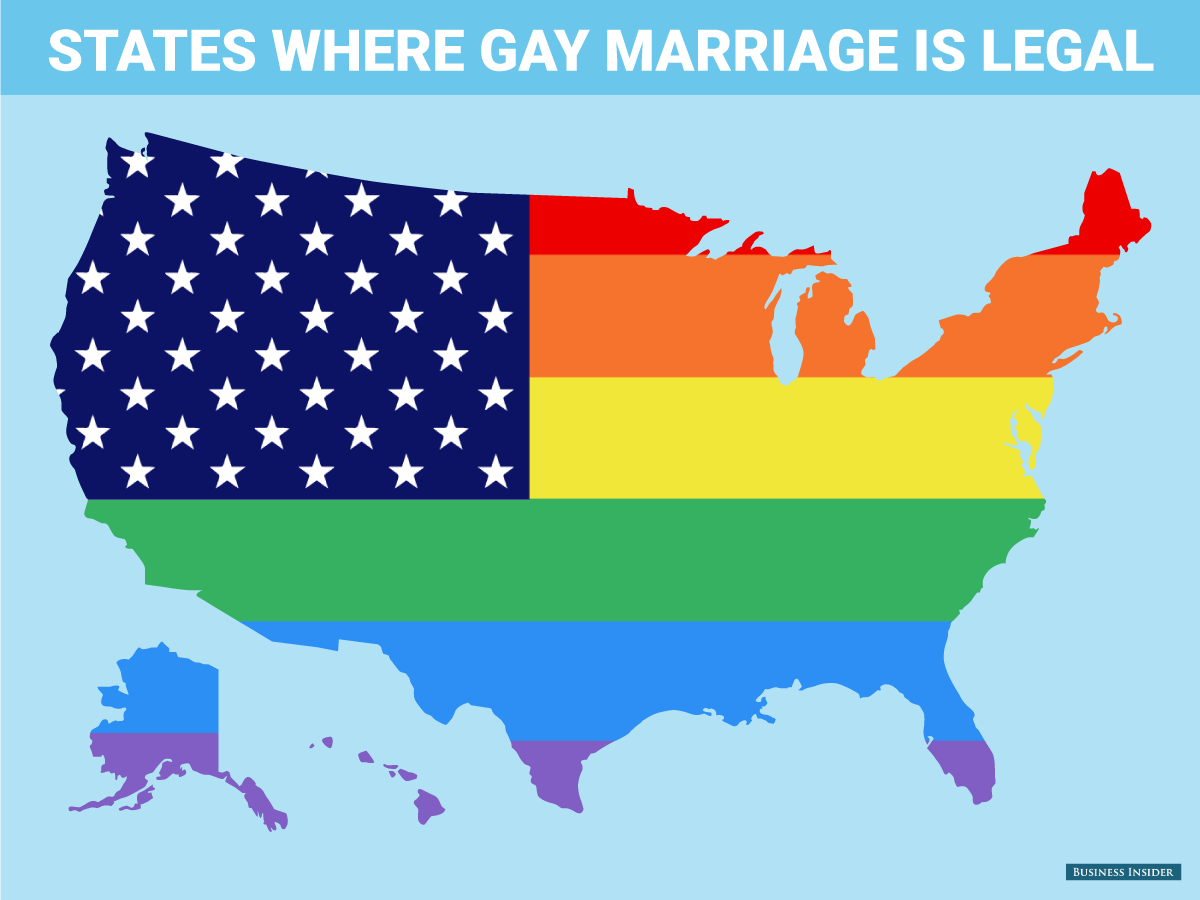
The church has always opposed gay marriage , and even received national dissatisfaction after it fought against gay marriage in California through Proposition 8 in 2008. However, LDS officials later worked with gay rights advocates on a political compromise, a bill known as the “Utah compromise”, which was passed in March 2015 supposedly for the purpose of protecting LGBTQ people from discrimination.
Matthew Bowman, a historian and author of “The Mormon People” said, “There have been attempts by the church to reach out, to formulate relationships with LGBT Americans. This policy seems to be a step away from that.” ("The LDS-Mormon church adopts new anti-LGBT policy that targets children") “I don’t see it [the policy change] as revolutionary, but very consistent with other church policies on marriages that are outside the Mormon pale, like polygamy,” said Ardis E. Parshall, a historian on Mormonism. “That does not lessen the pain for friends and families involved, though, so it’s tremendously significant.” ("The Daily Herald, 2015") It’s true that people are still being hurt, and not by nothing. “People who support the church up and down have trouble with this,” said Steve Evans, a contributor to the popular Mormon blog By Common Consent. “It looks like you’re punishing children for the acts of their parents. I don’t think they are punishing children, but I’m really torn about it.” ("Reading Eagle", 2015)With the change in church policy, however, one is left to ask whether the church is protecting LGBTQ members of the church.
It’s also said that “Jehovah’s Witnesses and Mormons are the most opposed to same-sex marriage” and that “about 70 percent of Mormons oppose same-sex marriage while 26 percent favor it”. Take into consideration that.”about 57 percent of Mormons say homosexuality should be discouraged by society, down from 68 percent in 2007.” ("Washington Post")
Randall Thacker, president of a group called Affirmation – LGBT Mormons, Families & Friends, said “The policy came as a shock to many Mormons.” “As Mormons, we are pro-family and I find it hard to see how this lives up to that value,” he said. “It just raises a big question for me as to would I want to continue to engage with an organization that outright denies certain essential ordinances, such as baptism to my children.” ("The Daily Herald, 2015") Thacker, a gay Mormon who would like to be married and have children someday, said that LGBTQ Mormons feel pushed out of the church; He also said it’s unlikely he would bring his children to church.
Through the policy change, parents alone aren’t the only ones who are discriminated against. While young children may not completely realize what’s going on, the older youth seem to have a firm grasp on the situation:
“People who support the church up and down have trouble with this,” said Steve Evans, a contributor to the popular Mormon blog By Common Consent. “It looks like you’re punishing children for the acts of their parents. I don’t think they are punishing children, but I’m really torn about it.” ("Reading Eagle", 2015)
In a personal interview, a good friend named Maddie said, “The youth are being forced to decide between their family, religion, and sexual-orientation.”. Madison Heineicke, a member of the LGBTQ community often speaks with friends about this situation and tries to be there for those in need.
Since the policy change, there has been a recorded rise in homeless LGBTQ LDS youth. According to OUTreach Resource Center, a center to help homeless youth in Utah, “LGBT children kicked out by rejecting Mormon parents also saw an increase...Utah youth experiencing homelessness are estimated at 5,000 annually...40 percent of youth experiencing homelessness in Utah identify as LGBT, with 50 percent of those from LDS homes. OUTreach Resource Center’s data shows consistently over time that 62 percent of LGBT-identified youth have attempted suicide, and virtually all have lost a friend or acquaintance.” ("The Salt Lake Tribune")
Heavily influenced by Mormon culture, Utah has become a leader in homeless LGBTQ youth in the nation. “Many of those youths have been kicked out of their homes or have run away. Foster families are reluctant to take in LGBT children in this state," said Berta Marquez, cofounder of Safe and Sound, and a Mormons Building Bridges committee member. "So they're left with nothing in this state." ("The New Civil Rights Movement")
Many have already seen the effects of the policy change. “The mental effect on Mormon youth is becoming clearer. ‘Therapists have seen an uptick in clients who reported suicidal thoughts,’ the Salt Lake Tribune reported recently.” ("The Salt Lake Tribune")
Try to imagine what it would be like to be an LDS LGBTQ youth; Often you’d hear that God thinks you’re sinful for feeling the way you do and for expressing it. On top of that, your family oftentimes either rejects your sexuality or thinks you should leave your faith. There's only one way to avoid choosing one path or the other in the end, and the youth have already begun suicidal attempts.
“Nationally, LGB youth are four times more likely than their straight peers to attempt suicide, according to The Trevor Project. LGB youth who come from highly rejecting families are 8.4 times as likely to attempt suicide as those who report no or low levels of family rejection. And one quarter of young transgender people ‘report having made a suicide attempt.’” ("The Salt Lake Tribune")
“Wendy Montgomery shared during a meeting for Affirmation, (a supportive group for LDS LGBTQ people) that family members of 26 Utah youth and 6 youth from other states who ended their lives had reached out to her during the time following the November policy announcement and through the end of December. Montgomery, mother of a gay son and featured in the Family Acceptance Project film Families Are Forever, is co-founder of Mama Dragons, a group for mothers of LGBTQ children. (Edmonds-Allen, "Advocate", 2016)
According to the Mama Dragons, “All of the victims...with an average age of 17...were transgender, and all but six of the suicides occurred in Utah.” (Edmonds-Allen, "Advocate", 2016)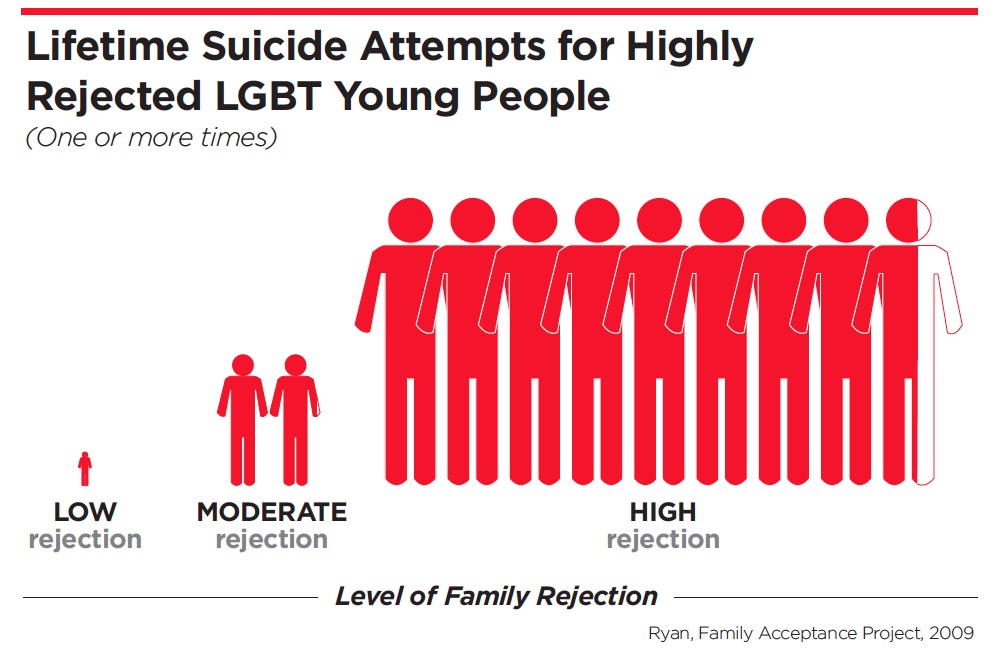
It’s time a change is made—a change of acceptance in the church and in its members. Jesus taught to “love thy neighbor as thyself”, not to love thy neighbor if they be straight. Don’t let the fear of judgement or disciplinary action keep you from the “golden rule”. It can all be fixed if we accept others for who they are: our fellow brothers and sisters. Perhaps LGBTQ youth in Utah will then begin to feel accepted by the vast number of people affected by Mormon culture.
But, the church provides a way for gay-influenced children in the church. If the individual follows those two rules: disavow their parent’s immoral practices, and leave the parents household. Only then may they request approval to be baptized, confirmed, ordained to the church priesthood and recommended for missionary service— with the permission of the faith’s highest leaders, the First Presidency, that is.